Kinds of Pressure Safety Valves (PSV)
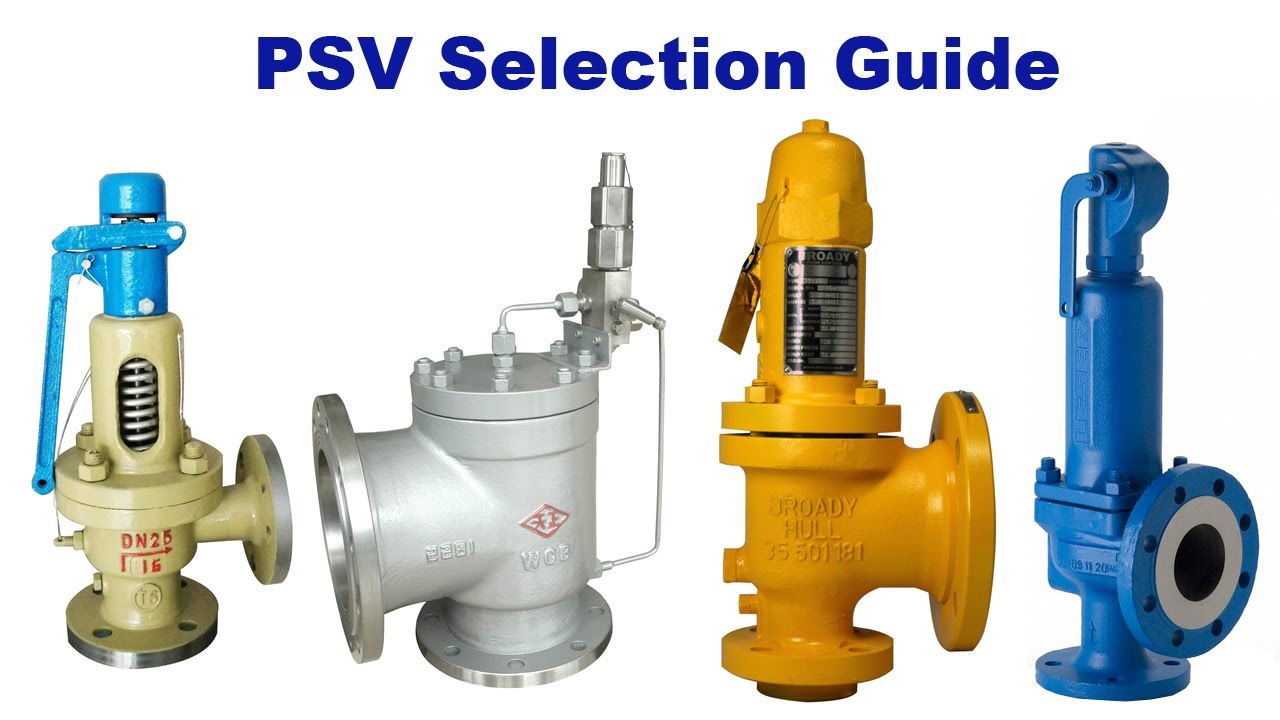
Pressure Safety Valves (PSVs) are essential components used to protect pipelines, vessels, boilers, and process equipment from excessive pressure. When pressure rises beyond a safe limit, PSVs automatically open to release the excess energy, preventing equipment damage and ensuring plant safety. At FCT Valve, we supply a wide range of safety valves engineered for reliability, accuracy, and compliance with international standards such as API, ASME, and ISO.
Below are the main types of PSVs used across industries.
1. Spring-Loaded Pressure Safety Valve
This is the most common type of PSV. A calibrated spring holds the disc closed until the set pressure is reached.
How it works: when pressure exceeds the spring force, the disc lifts and releases fluid.
Advantages: simple design, high reliability, suitable for gases, steam, and liquids.
Applications: boilers, pressure vessels, air compressors, process lines.
2. Pilot-Operated Pressure Safety Valve (POPSV)
A pilot-operated PSV uses system pressure acting on a pilot valve to control the main valve.
How it works: the pilot senses pressure and controls the opening of the main valve for precise operation.
Advantages: very accurate set points, tight shut-off, suitable for high-pressure systems.
Applications: refineries, petrochemical plants, gas pipelines, high-capacity systems.
3. Balanced Bellows Safety Valve
In a balanced bellows PSV, a bellows chamber protects the spring from backpressure.
How it works: the bellows isolates the spring area, maintaining stable performance even when backpressure changes.
Advantages: ideal where variable backpressure exists, stable opening, high reliability.
Applications: flare systems, multi-valve manifolds, condensate lines.
4. Conventional Safety Valve
A conventional PSV operates with the spring directly exposed to the discharge side.
How it works: backpressure affects the opening but it is suitable for low to moderate pressure systems.
Advantages: economical, widely used, easy maintenance.
Applications: low-pressure steam, water heaters, compressors.
5. Thermal Relief Valve (TRV)
A Thermal Relief Valve is a small PSV used to protect piping segments where liquid expansion occurs due to temperature rise.
How it works: when liquid expands and pressure builds, the valve opens briefly to relieve the excess pressure.
Advantages: compact, fast acting.
Applications: blocked liquid lines, pipelines exposed to sun/heat, pump discharge piping.
6. Rupture Disc + PSV Combination
In critical systems, rupture discs are installed upstream of a PSV to isolate corrosive fluids or prevent leakage.
How it works: when pressure reaches the burst point, the disc ruptures and the PSV opens.
Advantages: zero leakage, extended PSV life, enhanced safety.
Applications: chemical plants, toxic or corrosive media service.